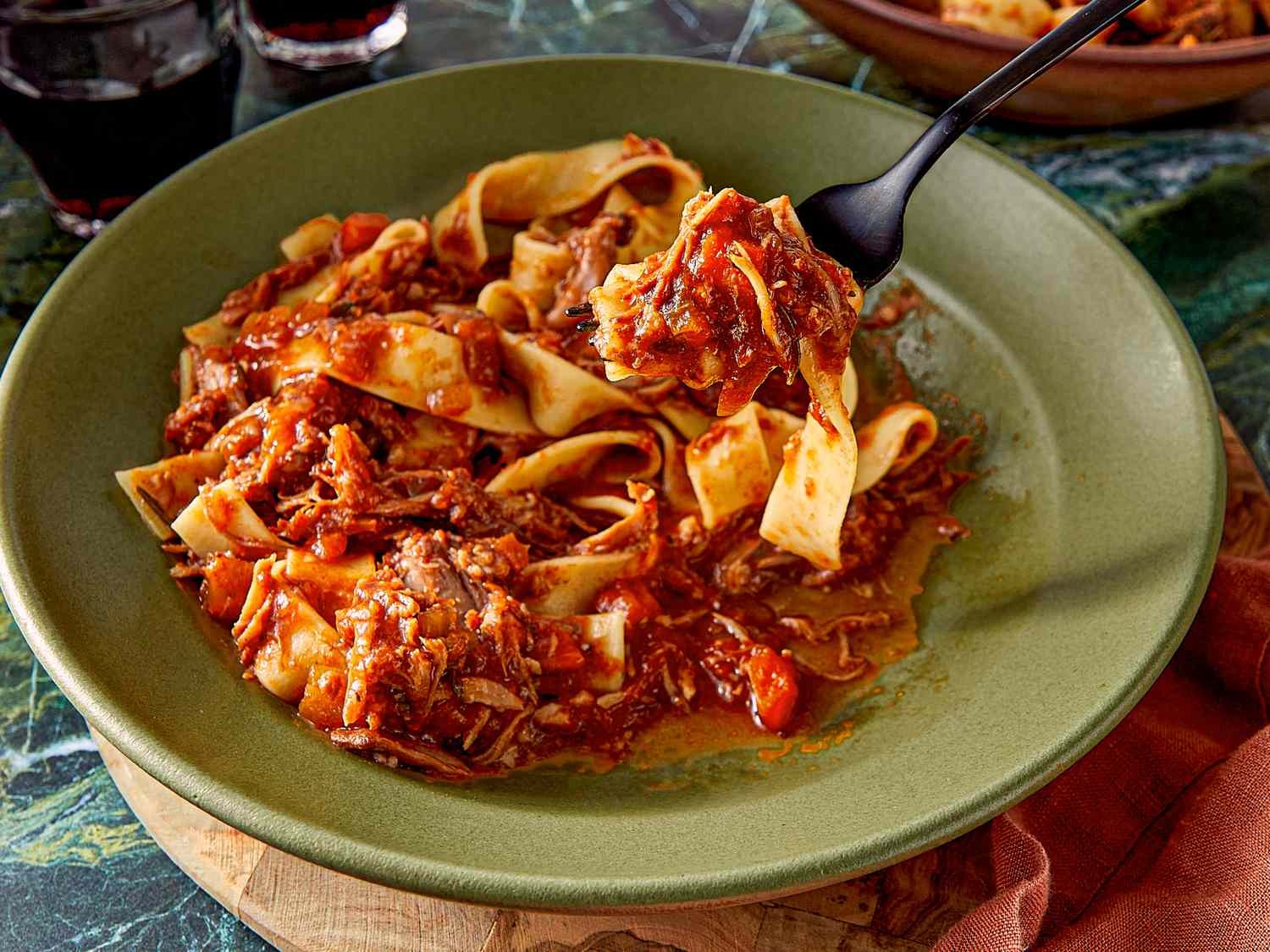
For many Italian-American families, a slow-cooked pork ragù – often called “Sunday gravy” – is a staple. This recipe blends the rich traditions of Italian ragù with the convenience of the American slow cooker, delivering a hearty, flavorful sauce perfect for a comforting meal. While Italian ragù varies by region, this version prioritizes deep flavor and tender meat, achieved without complicated techniques.
Why Slow-Cooking Works
The slow cooker gets a bad reputation, often associated with bland, watery dishes. However, when used correctly, it excels at breaking down tough cuts of meat and melding flavors over time. Unlike stovetop cooking, slow cookers trap heat and moisture, minimizing evaporation – a factor that requires careful liquid management but ultimately leads to concentrated flavor. This recipe leverages the slow cooker’s strengths, making a traditionally labor-intensive sauce surprisingly accessible.
The Ribs: A Better Cut for Flavor
Many pork ragù recipes start with pork shoulder, but St. Louis–cut ribs offer a more consistent result. Ribs contain a balanced fat-to-meat ratio and bones that infuse the sauce with collagen as they break down, creating a richer, more flavorful broth. Unlike some shoulder cuts, ribs remain consistently tender throughout the cooking process, shredding into spoonable morsels instead of drying out.
Building Flavor Without Browning
Traditionally, browning meat is crucial for developing deep flavor in ragù. However, this recipe demonstrates that it’s not essential. By carefully controlling the liquid-to-meat ratio, the sauce achieves depth without pre-searing. Too much liquid leads to watery results; too much tomato or wine creates a jammy or overly tart sauce. The combination of passata, chicken stock, red wine, and tomato paste strikes a balance between acidity, richness, and viscosity.
Finishing Touches for Maximum Flavor
After slow cooking, the pork should fall apart with a fork. The bones and herb sprigs are removed, then a potato masher breaks down the meat directly in the slow cooker, ensuring even distribution throughout the sauce. Wide noodles like pappardelle are ideal, providing ample surface area for the ragù to cling to. The result is a perfectly coated, satisfyingly hearty dish with no pooling at the bottom of the bowl.
The key to a successful slow-cooker ragù is understanding how trapped heat and moisture affect flavor development. By adjusting liquid levels and embracing the slow cooker’s strengths, you can achieve a deeply flavorful sauce with minimal effort.
This recipe offers a modern take on a classic Italian-American dish, proving that comfort food can be both delicious and convenient.