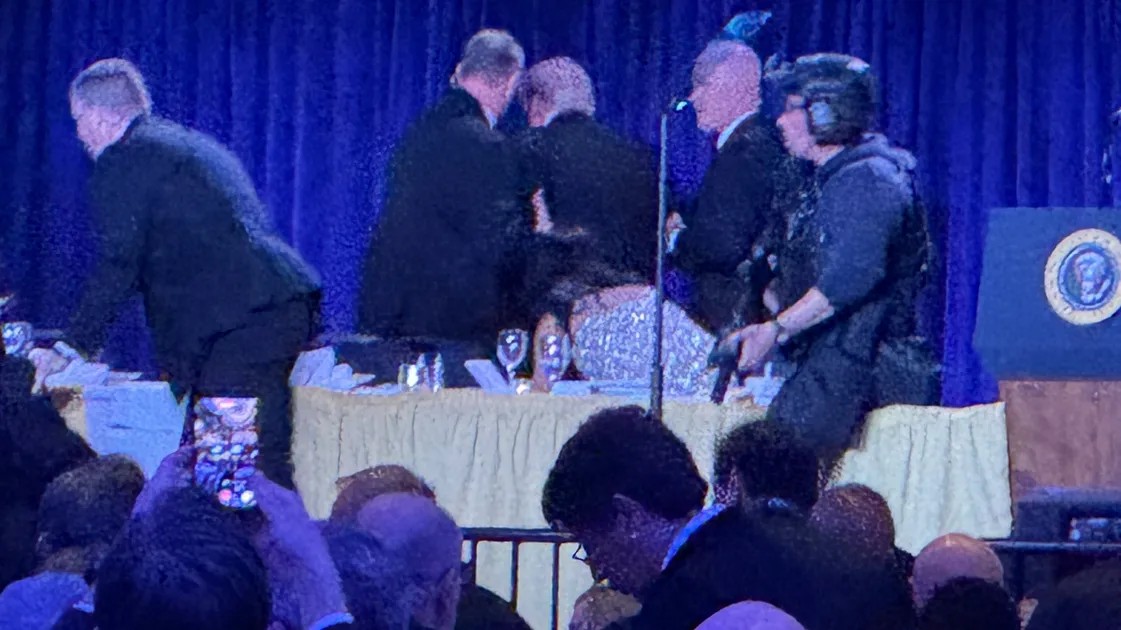
What began as a high-stakes security crisis at the White House Correspondents’ Dinner (WHCD) ended with an unexpected act of community support. Following a violent breach that forced the immediate evacuation of dignitaries, the surplus food from the event was repurposed to aid vulnerable populations.
A Night of Chaos at the Washington Hilton
The annual event at the Washington Hilton was interrupted by a violent security incident when a gunman attempted to breach a checkpoint near the ballroom. The assailant, who has since been charged with an attempted assassination of President Donald Trump, fired upon security personnel, striking a Secret Service agent in his bulletproof vest.
The breach triggered an immediate emergency response:
– Evacuation: Security teams stormed the dining room to clear the area.
– Protection of Dignitaries: The President, several Cabinet members, and various high-profile guests were rushed to safety.
– Emergency Response: While the situation was stabilized, the event was effectively halted mid-service.
Turning Surplus into Support
Despite the disruption, the logistical aftermath of the event took a humanitarian turn. Because the dinner was cut short, approximately 2,600 meals went unserved.
Weijia Jiang, President of the White House Correspondents’ Association (WHCA), confirmed that the Washington Hilton took decisive action to prevent waste. In coordination with the hotel, the unserved meals—which included premium items like steak and lobster—were freeze-dried to extend their shelf life. These meals were then donated to two shelters dedicated to serving abused women and children.
This move highlights a growing trend in large-scale event management: the transition from simple food waste to “food rescue” models, where high-quality surplus is redirected to local social safety nets rather than being discarded.
Moments Amidst the Tension
The sudden nature of the evacuation created several surreal moments captured by attendees. While security personnel focused on the threat, some guests and staff were seen reacting in idiosyncratic ways:
– The “Hygiene” Defense: One CAA agent, Michael Glantz, became a point of discussion after being seen eating his salad during the chaos. He later explained that his refusal to drop to the floor was due to both a back injury and a desire to keep his formal attire clean during the evacuation.
– Logistical Oddities: Amidst the tension, reports surfaced of guests attempting to secure beverage supplies, including wine, as the event dissolved.
Conclusion
The security breach at the WHCA dinner was a moment of significant national tension, yet the aftermath provided a silver lining. By converting a potential waste of luxury resources into essential aid for domestic abuse shelters, the organizers and hotel staff transformed a moment of crisis into an act of social responsibility.