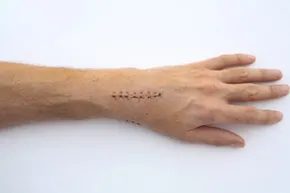
We’ve been conditioned to think of scars as badges of villainy. Think Freddy Krueger. In horror movies, a scarred face is a warning label. It says danger. It says don’t look too close.
The reality is far less cinematic. Scars are just thick patches of skin. They form when your body tries to heal a wound. Almost every adult has at least one. Maybe it’s a small one from childhood. Maybe it’s a surgical mark. You’re not broken. You’re just healing.
But when those marks become raised, indented, or discolored, they can affect how you see yourself. And that’s where the confusion starts. There are endless creams, lasers, and myths floating around. Some work. Most don’t.
Here is what actually happens to your skin, and what you can do about it.
How Scars Actually Form
When you get cut, burned, or scraped, your body doesn’t just “close the gap.” It goes into construction mode. It uses collagen as a framework. Think of collagen as scaffolding. It repairs the damaged tissue.
But collagen isn’t identical to your surrounding skin. It has a different texture. It’s shinier. It’s often pinker. If the injury was severe, you might have missing tissue. In that case, the scar can look pitted or craggy.
There are many types of scars. Keloid scars extend beyond the original wound. Contracture scars, often from burns, tighten the skin and limit movement. Acne scars are their own beast.
Because there are so many varieties, it’s nearly impossible to go through life without acquiring a few. The key is understanding which type you have before you start buying products.
Professional Scar Treatments
If your scars are bothersome, dermatologists have options. They aren’t just about vanity. Deep, painful, or restrictive scars need medical attention.
For raised scars, the first line of defense is often topical. Silicone-containing gels and creams can help reduce thickness. You have to use them regularly. It’s not a one-time fix.
Doctors can also administer cortisone injections directly into the scar during an office visit. This shrinks the raised tissue.
For indented scars, doctors use soft tissue fillers. Collagen, hyaluronic acid, or even your own fat can be injected to smooth out the dip. The results are immediate. But here’s the catch: you have to redo these treatments periodically. The body absorbs the filler. It’s not permanent.
Other procedures include:
– Dermabrasion : Essentially sanding the skin. It removes layers to make the surface even.
– Chemical peels : Using chemicals to strip away top layers.
– Laser scar revision : High-energy light targets redness or flattens raised areas.
– Laser surfacing : Targets indented, atrophic scars.
– Punch grafts : Removing the scar with a hole-punch-like tool and grafting new skin.
These treatments reduce appearance. They do not erase scars completely. Surgery might be recommended for large, deep, or irregular scars. But even surgery cannot remove scar tissue entirely. It can only reduce its size.
Home Remedies That Might Help
If you’re not ready for a dermatologist, there are home remedies. Some are backed by science. Most are just hopeful guesses.
Aloe vera is probably the most popular. It has moisturizing properties. Proponents believe it increases elasticity and reduces inflammation. Studies actually show that applying aloe vera gel to scar tissue can reduce the size and appearance of scars. It’s a safe place to start.
Vitamin E and cocoa butter are also popular. The theory is the same as aloe vera: keep the skin moisturized. But there is no consistent evidence that either method is truly effective. They are topical and natural. Unless you’re allergic, there’s no harm in trying.
Tea tree oil is different. There’s little evidence it repairs existing scars. But it can help prevent acne scarring. Tea tree oil kills bacteria. Bacteria cause acne flare-ups. You’ll often find it in gels and creams for active acne.
The Olive Oil and Lemon Juice Myth
You’ve probably seen articles claiming olive oil or lemon juice can cure scars. They claim it fades discoloration. It brightens the skin.
There is no scientific evidence to support this.
Olive oil is great for your hair. Lemon juice is great for your hair. But on scar tissue? You’re likely better off using them in a salad dressing. They don’t penetrate deep enough to change the collagen structure. They don’t have the anti-inflammatory power of proven treatments.
So, what do you do? You assess. You identify the type of scar. You try aloe vera if you want a natural approach. You consult a dermatologist if the scar is raised, indented, or bothering you functionally.
Scars are part of being alive. They’re proof you’ve healed from something. But if you want them to fade, you need the right tools. Not the myths.
The next part of this guide dives deeper into specific types of acne scars and the targeted treatments that actually work for them. Until then, keep your skin moisturized. And maybe save the lemon juice for your vinaigrette.
Understanding the Two Sides of Acne Scarring
If you’ve dealt with breakouts between your teens and thirties, you aren’t alone. Nearly 80 percent of people in that age bracket get acne, and for many, that leaves a mark. But not all marks are created equal. To treat them effectively, you first need to know what you are looking at.
Generally, there are two main categories: raised scars and depressed (or pitted) ones.
Raised scars happen when your body produces too much tissue. Depressed scars are the opposite. They form when tissue is lost during the healing process.
Raised Scars: Keloids and Hypertrophic Types
When collagen goes into overdrive, you get a scar that sits above the skin line. These are usually shiny and can be quite large. Doctors typically split these into two types: keloids and hypertrophic scars.
Keloids are the heavier hitters. They tend to be hereditary and appear more frequently in people of African descent. They can keep growing beyond the original wound boundary. Hypertrophic scars are similar in being raised and excessive with collagen, but they usually stay within the bounds of the initial acne lesion.
Both can be frustrating because they don’t just sit there. They can itch or throb, and they are visually prominent.
Depressed Scars: The Texture Issues
Then there is the other side of the coin. These scars involve a loss of tissue, leaving dents or pits in the skin.
Ice-pick scars are one of the most common complaints. They look like small, jagged holes. If an ice-pick scar widens or changes, experts might classify it as a depressed fibrotic scar. These feel hard when you run your fingers over them. Early on, ice-pick scars might feel softer, but they tend to tighten up as they age.
Atrophic macules are another type. These have a wrinkled, bluish tint. They aren’t deep pits, but they create a uneven texture.
Follicular macular atrophy is less common but tricky. It looks like a small whitehead pimple that never quite heals or pops. It’s a lesion that mimics active acne but is actually a scar.
Treatment Realities: What Actually Works
Here is the practical part. Scarring is not permanent for most people. You can significantly reduce its appearance.
For raised scars like keloids and hypertrophic types, the treatment menu is familiar. Dermatologists often recommend cortisone injections to shrink the tissue. Surgery is an option for removing the excess mass. Laser scar revision can smooth out the surface and reduce redness.
Depressed scars require a different approach. If you have ice-pick scars, doctors might combine dermabrasion with punch grafts. This literally replaces the damaged tissue with healthy skin.
For other tissue-loss scars where the skin is just thin or wrinkled, dermabrasion and chemical peels work wonders. They strip away the top layers, forcing new, smoother skin to grow in its place.
The key is matching the treatment to the scar type. Using a chemical peel on a deep keloid won’t do much. You need a dermatologist to diagnose the texture before you spend a dime.
The Celebrity Illusion
We often see clear skin on red carpets and assume it’s all genetics or expensive creams. It’s not.
Brad Pitt, Will Smith, Cameron Diaz, Sean Connery, Madonna, and Nicholas Cage all have acne scars. They have them. The difference? They have airbrushing.
In photos, those blemishes are smoothed out by digital tools. It’s a luxury most of us don’t have. We have to live with the texture. But that doesn’t mean we are stuck with it looking like a crater field.
Next Steps
Once you decide to tackle your scars, don’t guess. Contact a dermatologist. They can show you which combination of treatments fits your specific skin type and scar profile.
If you want to dig deeper into how skin heals or how to care for it generally, there are plenty of resources available. Look into how sun exposure affects healing scars. It matters more than you think.
Check out articles on how burns work or how thin skin ages. Understanding the biology helps you make better choices in the treatment room.
Sources include the American Academy of Dermatology, Mayo Clinic, and various dermatological journals. Their data on chemical peeling, dermabrasion, and soft-tissue fillers forms the backbone of modern scar reduction.
The goal isn’t perfection. It’s reduction. It’s confidence. And that is something you can work toward, step by step.