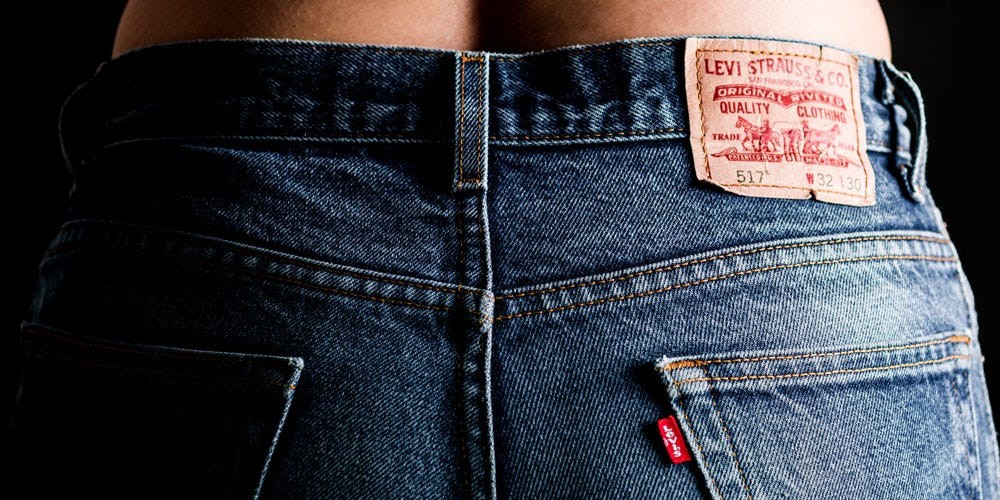
Denim is a global wardrobe staple, but its environmental footprint is heavy. The production of a single pair of conventional jeans requires approximately 2,000 gallons of water —a staggering figure that highlights the massive resource consumption inherent in the traditional textile industry.
In a move to address this impact, Levi Strauss & Co. is testing a new manufacturing method that transforms discarded clothing into high-quality denim.
The Technology: Turning Waste into Thread
Levi’s has partnered with Evrnu, a Seattle-based startup, to pilot a circular manufacturing process. Rather than relying solely on new cotton, the company is utilizing recycled cotton from old T-shirts to create high-performance thread.
The process works through a sophisticated recycling loop:
– Material Sourcing: Old cotton garments (like T-shirts) are collected.
– Fiber Transformation: Evrnu technology “morphs” these old textiles into new, high-quality fibers.
– Production: It takes roughly five T-shirts, combined with a small amount of “virgin” thread, to produce one pair of jeans.
Why This Matters for the Planet
The shift from traditional cotton to recycled fiber isn’t just a technical achievement; it is a critical step toward reducing the fashion industry’s water crisis.
According to data from Evrnu, producing a pair of jeans from 100% recycled materials would require 98% less water than producing denim from virgin cotton. By reducing water dependency, brands can significantly mitigate the environmental strain on regions where water scarcity is a growing concern.
The Road to a 100% Recycled Future
While the technology is promising, it is not yet ready for mass retail. Levi’s is currently working with a prototype of its signature slim-fit 511 jeans. The goal of this phase is to refine the material so that the recycled denim feels and performs exactly like the traditional denim consumers expect.
Currently, the prototype still requires a small amount of new cotton to maintain structural integrity. However, the company’s long-term vision is clear:
“In the future, we see garments made purely from Evrnu fiber,” a Levi’s spokesperson told Fast Company.
Conclusion
Levi’s experiment marks a significant pivot toward a “circular economy,” where waste becomes a resource rather than a pollutant. If successful, this transition could redefine denim production, moving the industry away from resource-heavy manufacturing toward a more sustainable, closed-loop system.