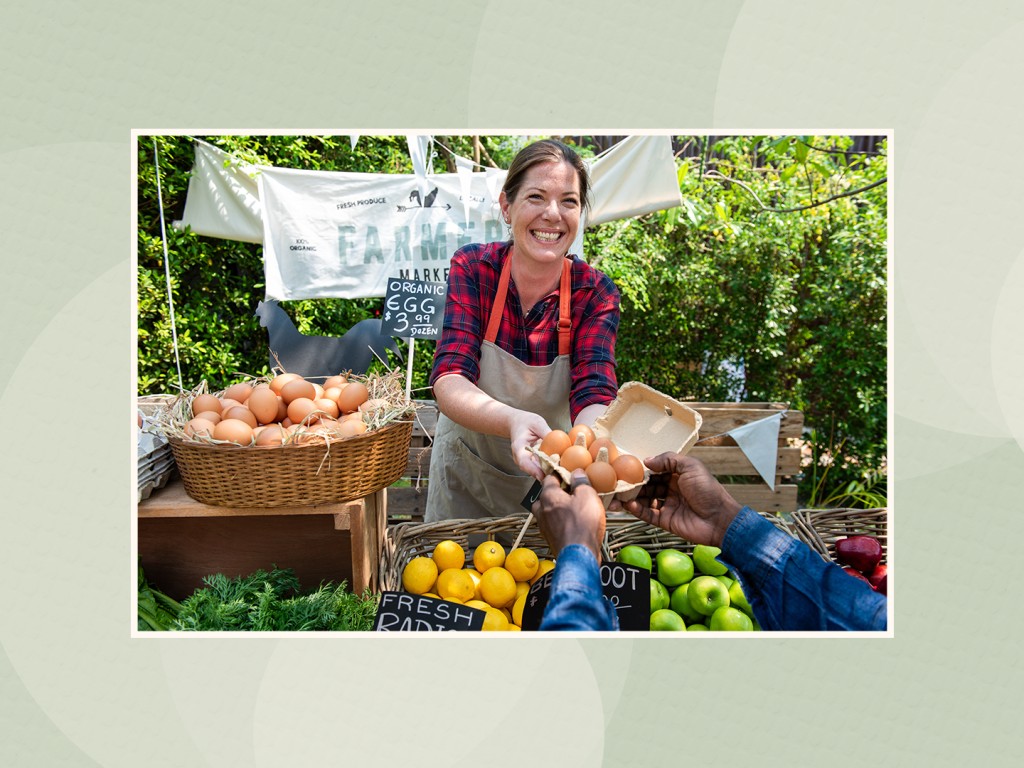
You’re staring at the eggs.
“Free range.”
“Cage-free.”
“Natural.”
You have no idea what any of that actually means.
Turns out, you’re not alone.
A recent survey by the ASPCA shows that nearly seven in ten Americans are completely in the dark when it comes to finding humanely raised food in their own neighborhoods.
We’re just confused.
Massively confused.
Enter the ShopKind tool.
It launched this week with a singular mission: stop well-meaning people from accidentally funding the industrial machines they find deeply unsettling.
Let’s look at the raw data for a second, because it’s grim.
Almost every egg, chicken breast, or carton of milk you buy comes from a factory farm.
The Sentience Institute released a report in 2024 that broke it down:
98.6% of pigs.
99.8% of turleys.
98.3% of laying hens.
99.9% of broiler chickens.
Even 74.9% of the cows.
Those numbers represent living conditions that are… well, let’s not dignify them with words like “conditions” at all.
It’s bleak.
Most Americans claim to care about animal welfare. They worry about the environment and their own health too.
But then they walk into the store.
And they buy the usual.
ShopKind isn’t just another webpage.
It replaces the ASPCA’s older Shop With Your Heart program, which ran for a decade but frankly needed a tech upgrade.
This new thing works.
It uses geolocation to check more than 34,000 spots nearby.
Grocery stores.
Farms.
Markets.
Online shops.
The catch?
Every vendor listed actually has the goods.
They meet real certifications.
Outdoors access.
No cages.
No crates.
If a place makes it into the search results, animals aren’t spending their entire existence confined in warehouse-style buildings.
You can even build your own list.
Send it to your email.
Or, you know, forward it to your partner who definitely ignores your texts about ethics while picking out groceries.
Pragmatic, if you ask me.
The filters get surprisingly granular.
Want eggs without male chick culling?
You can filter for that.
Looking for chickens that aren’t the standard fast-growing hybrid breeds?
There’s a switch for that too.
Even pet food gets the same scrutiny.
There’s guidance on labels, too, because marketing terms are designed to obfuscate the truth, not reveal it.
“Voices and values are often drowned out in a marketplace flooded with factory farms,” says Daisy Freund, VP of Farm & Industry Engagement at the ASPCA.
She argues that setting a higher standard is the only way to move the needle. To get animals into the sun, and into the air.
Is it a magic wand?
No.
But it’s a tool.
One that puts power back in your cart instead of letting the corporation decide what you think “humane” looks like.
You still have to look.
You still have to choose.
But maybe, for once, the right choice doesn’t feel like a mystery.
Or maybe the labels still won’t make sense.