We’ve all been there. You pick up a beautiful, plump container of strawberries at the market on Saturday. They look perfect. By Tuesday night, they’re a mushy, gray mess. It’s a scenario so common it feels like a rite of passage for anyone who buys fresh fruit. Most people assume the mold just appeared out of nowhere in the fridge. They’re wrong. The spores were already there, invisible and dormant, the moment you paid for them. And there is a simple, five-minute fix that changes everything.
The Enemy is Already Inside
The culprit is Botrytis cinerea, a fungus that infects strawberry flowers. It stays dormant until the fruit matures. When the sugars in the berry increase, the fungus wakes up. By the time you bring those berries home, the battle is already being fought on the skin of the fruit.
If you leave them alone in a standard plastic container, you create the perfect storm. The fungus needs humidity above 90% for 16 hours and temperatures between 14 and 18°C. Your refrigerator, especially if poorly ventilated or sealed in tight plastic, hits that sweet spot perfectly. One bad berry can contaminate the whole batch in less than 24 hours.
Many people make the mistake of rinsing their berries immediately upon buying them. This sounds hygienic, but it’s actually destructive. Washing adds moisture and strips away the fruit’s natural protective wax. You are essentially accelerating the rot. The fridge alone cannot stop this. It maintains humidity but does nothing to neutralize the dormant spores waiting to multiply.
Why the Vinegar Soak Works
Professional food handlers use a specific technique to stop this decay before it starts. It involves a vinegar soak. This isn’t a guesswork hack; it’s chemistry.
White vinegar has a pH of around 2.5. The acetic acid in vinegar has proven antifungal properties. When you introduce this acidic environment to the surface of the strawberry, you create a zone that is hostile to microscopic fungi. The spores don’t stand a chance. They are destroyed before they can ever begin to grow.
The process is straightforward. Mix one part white vinegar with three parts cold water. A good ratio is about one tablespoon of vinegar for two cups of water. Submerge your strawberries in this solution for exactly five minutes. Not twenty. Not an hour. Five minutes is enough to kill the spores. Soaking them longer just makes the fruit soft and waterlogged without adding any extra preservation power.
The Step Everyone Skips (But Must Do)
Here is where most people fail. After the soak, you must rinse the berries under cold running water to remove the vinegar taste. Then comes the part that matters most: drying.
You need to gently pat the strawberries dry with a clean towel or paper towels. Any residual moisture left on the skin will undo all your hard work. Wet strawberries in the fridge rot faster. The vinegar did its job on the spores. But if you put wet fruit back into the dark, humid environment of the refrigerator, you are inviting new contamination. Dryness is key.
How Long Will They Actually Last?
A typical grocery store claim is that berries will last about ten days. With this method, you can extend that life significantly. Users report keeping strawberries firm and flavorful for one to three weeks. In practice, expecting a full week to ten days of clean, firm fruit is a realistic and consistent result using this complete method.
Compare that to the standard method. Without preparation, soft spots appear by day three. The gray Botrytis fuzz shows up by day four. With the vinegar soak, proper drying, and correct storage, you push that timeline back by a factor of three or four. It isn’t magic. It is prevention at the source.
Storage Matters Too
How you store them after the bath is just as important as the bath itself. Do not put them back in the original perforated plastic container. That tray is designed for display, not long-term storage.
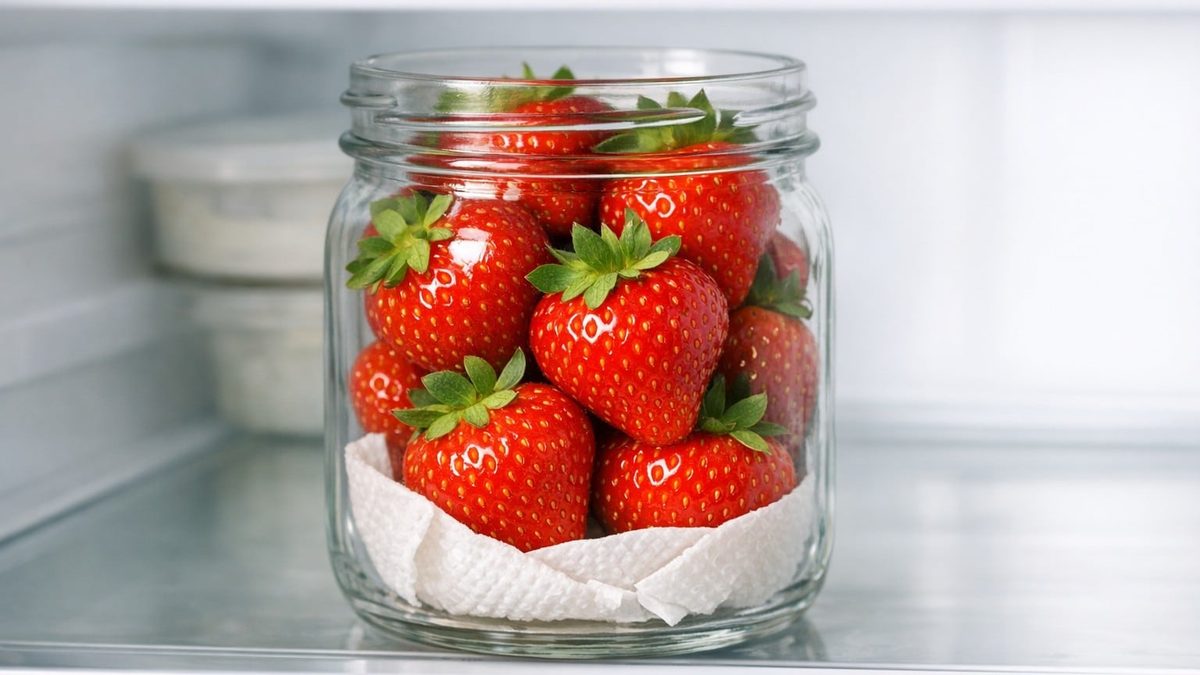
Instead, line an airtight container with paper towels. Place the dried strawberries in a single layer on top of the towels. The paper absorbs any excess liquid naturally released by the fruit, preventing condensation. A glass jar works well for this because it regulates humidity better than thin plastic. Keep them in the fridge.
The next time you buy strawberries, spend the five minutes. The extra effort pays off in flavor, texture, and zero waste. You end up with fruit that actually tastes like summer, not like decay. Why settle for mush when you can have crunch?
The Green Cap Rule
Stop picking the stems off before you store them. I know it’s tempting. You see those green caps and think they are just clutter. They aren’t. That little membrane around the stem is a natural shield. It keeps oxygen out. It keeps the fruit from drying up.
If you hull them early, they turn mushy in hours. Just leave them alone until the moment you are ready to eat.
The One Bad Apple Principle
Here is the hard truth. One bad berry can ruin the whole batch.
Before you do anything else, sort them. Pick through the box. Throw out any fruit with a soft spot or a tiny bruise. It doesn’t matter how small the damage looks. Mold spores spread fast by contact. This is the rotten fruit in the barrel rule, applied to a pint of strawberries.
You have to be ruthless. If it looks suspect, it goes in the trash. Do not risk the rest of the box.
The Five-Minute Ratio
So, what is the actual move?
The vinegar bath. It sounds weird. It sounds like you are marinating dessert in salad dressing. But it works.
You dip them. You rinse them well. You dry them completely. Then you store them.
The payoff is staggering. Five minutes of work buys you five extra days of freshness. Try to find another kitchen hack with that kind of return on investment. It is hard.
Think about the cost. A pint of strawberries at the market on Sunday costs ten euros. If you throw half of it away because it went bad by Wednesday, you have wasted five euros. The vinegar method stops that waste. It keeps the berries firm. It stops the brown rot.
When to Freeze
Summer sometimes gives you too much. A surplus that feels overwhelming.
In that case, skip the fridge tricks. Freeze them.
Freezing is the best long-term storage method. It keeps the fruit good for up to six months. You lose the fresh crunch, sure. But the flavor stays. You can use them in smoothies or baked goods later. It is a practical exit strategy when the harvest gets out of hand.
But for that weekday snack? The fresh box from the store? The vinegar rinse is the only smart play.
It is not about perfection. It is about not wasting good food. It is about keeping the taste bright until the very last bite.
The rest of the summer is long. Don’t waste the beginning.