Dieting isn’t just a hobby. It’s woven into the fabric of American life. Pick up any magazine or scroll through any social feed, and you’ll see someone counting macros, naming their restrictive plan, or swearing off carbs. You’ve heard the names. Atkins. Cabbage Soup. Grapefruit. South Beach. Zone. The list feels endless because the culture of restriction is constant.
But before you blame your willpower, you need to understand the engine you’re working with. Specifically, you need to look at why gaining weight is so easy for most people. The answer isn’t lazy genes or a lack of discipline. It’s biology. Your body is terrifyingly efficient.
The Hidden Cost of Staying Alive
Have you noticed how weight seems to creep up as you cross 30? It’s not just age. It’s efficiency. Your body doesn’t just survive on a little energy. It thrives on frugality.
When you are resting, sitting on the couch, or staring at your phone, your body is still burning fuel. But barely. The Basal Metabolic Rate (BMR) burns roughly 12 calories per pound of body weight per day.
Let’s do the math for a 150-pound person:
150 x 12 = 1,800 calories per day.
That’s it. 1,800 calories keeps your heart pumping. It powers your lungs. It keeps your brain firing and your core temperature steady. You don’t even have to move to burn that. Most people assume their metabolism slows down significantly with age, but the real culprit is that modern life requires less movement to maintain that baseline.
Motion is Frugal, Too
You might think exercise is the great equalizer. It burns calories, right? Yes. But your body treats movement as an expense to be minimized.
Consider a marathon runner. They cover 26 miles. The total energy cost? About 2,600 calories. That breaks down to roughly 100 calories per mile.
Compare that to a car. A typical American sedan gets 15 to 30 miles per gallon. A gallon of gasoline contains about 31,000 calories. If a human could drink gas, they could run 26 miles on just 0.3 liters (one-twelfth of a gallon). That makes a human body equivalent to a vehicle getting over 300 miles per gallon.
Ride a bike? You’re looking at over 1,000 miles per gallon.
Your body is more efficient than any machine ever built. It is designed to hoard energy, not waste it.
This efficiency is the main reason traditional diet culture often fails. You are fighting against millions of years of evolutionary programming that says: move less, store fat, survive the winter.
Taking Calories In
So, if your body is so good at holding onto energy, how do you tip the scale? You have to look at the input side of the equation. We’ll break down what goes in, why portion sizes have shifted, and how small daily choices compound into significant weight gain over time.
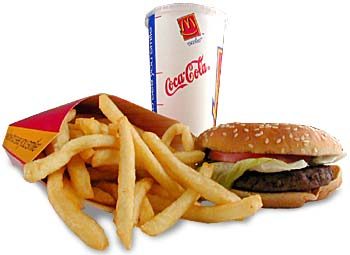

The calorie illusion of a single fast-food run
Most people underestimate how thin the margin is between survival and surplus. The baseline for a sedentary adult hovers around 1,800 calories a day. That is the number your body needs just to keep the lights on. It is not a budget for extra indulgence. It is the limit.
Consider the Big Xtra meal from McDonald’s. You think you are grabbing lunch. You get a sandwich, large fries, and a large Coke. The math hits hard and fast.
The sandwich alone clocks in at 710 calories. The fries add another 540. The soda contributes 310. That totals 1,560 calories in one sitting. You have burned through nearly 87% of your daily allowance before you’ve even left the parking lot.
Add a dessert? An M&M McFlurry brings 630 more calories. Suddenly, that single meal pushes you to 2,190 calories. You are already in a surplus. Your body is storing energy it does not need.
Pizza Hut tells a similar story. A Meat Lover’s Pan Pizza slice contains 360 calories. Three slices and a large drink equal 1,390 calories. You are 410 calories away from hitting your full daily cap. One meal. That is the gap.
These numbers are not theoretical. They are exact figures from the respective nutrition guides. Fast food is dense. It is engineered to be consumed in large quantities while providing surprisingly few nutrients relative to the energy load. When you treat a fast-food chain as a casual dining option, you are not just eating dinner. You are consuming your day’s worth of energy in one go.
The result is a slow creep toward excess. Not because you are greedy. But because the portions are calibrated to exceed the average person’s resting metabolic needs. Awareness changes the dynamic. Knowing the count allows you to make choices. You can split an order. You can skip the drink. Or you can accept that the meal is a treat, not a norm.
Making sense of the numbers
It is easy to dismiss these figures as extreme. They are not. They are standard menu items. The difference lies in perspective. We often view a burger and fries as a single unit of food. The calorie count reveals it as a significant portion of daily intake.
This clarity helps in planning. If you know a meal runs 1,500 calories, you can adjust the rest of the day. Lighter breakfast. Vegetable-focused lunch. Or you can choose to eat less frequently. The goal is not deprivation. It is alignment. Align what you consume with what you expend.
Fast food offers convenience. It also offers high energy density. Understanding that density empowers you. You can enjoy the food without letting it dictate your health. The choice remains yours.
The Invisible Calorie Creep
Try eating twelve SnackWell’s Crème Sandwich Cookies. Honestly, it isn’t even that much food. You’ve just swallowed 660 calories. That is more than a third of what your body needs in an entire day.
This isn’t about shaming packaged snacks. I have two kids. I go to McDonald’s at least once a week. The point is simpler and scarier: in America, calories are everywhere. They are cheap, convenient, and relentless.
Think about a typical Tuesday. You are overworked and over-extended. Convenience wins.
- Breakfast is two Pop-Tarts.
- Lunch is a slice from Pizza Hut.
- Afternoon snack? A bag of SnackWell’s and a cola.
- Dinner is McDonald’s.
- Evening winds down with potato chips while binge-watching TV.
Do the math. You are looking at 3,000, 4,000, or maybe 5,000 calories. And you didn’t even try.
Your body is a biological machine designed to survive famine. It loves storing excess energy. If you have extra calories, it turns them into fat. It’s efficient. It only takes 3,500 excess calories to create one pound of new body fat.
If you eat just 500 extra calories a day, you gain a pound every week. 500 times seven days equals 3,500. One ice cream cone or a handful of cookies gets you there. Weight gain is effortless in a culture where food is the default solution to stress, boredom, and time management.
The Mechanics of a Deficit
Let’s say you want to lose five pounds. To drop one pound of fat, you need to burn 3,500 calories. You need to consume fewer calories than your body burns.
Assume you weigh 150 pounds. Your body needs about 1,800 calories just to exist at rest. Here is how you can create a deficit:
- Starve in bed. You burn 1,800 calories doing nothing. You eat zero. You create a 1,800-calorie deficit daily. You lose a pound every two days. This is sustainable for exactly as long as it takes you to faint.
- Restrict intake. You eat 1,500 calories a day. Your body needs 1,800. That is a 300-calorie deficit. You lose a pound every twelve days.
- Move. You eat your normal 1,800 calories. You jog two miles. You burn 200 extra calories. It takes eighteen days to lose a pound.
- The extreme. You eat 2,500 calories but run ten miles a day. You burn 1,800 at rest plus 1,000 running. Total burn: 2,800. You are still in a 300-calorie deficit. Same result as option two, but you’re exhausted.
The math is brutal in its simplicity. To lose fat, you must consume fewer calories than your body needs. Period. You can shrink the input side, expand the output side, or do both. Most diets are just tools to lower that input number. Weight Watchers, grapefruit diets, keto—they all boil down to eating less than you burn.
Why Most Diets Fail
The problem isn’t the science. It’s the sustainability.
Most diets create a temporary deficit. When the diet ends, you go back to your normal life. And your normal life is slowly adding weight.
Let’s look at the math of slow gain. You weigh 150 pounds. You burn 1,800 calories resting. You walk around, carry groceries, climb stairs. You burn another 200 calories living. Your daily need is 2,000 calories.
Now, you eat 2,050 calories a day.
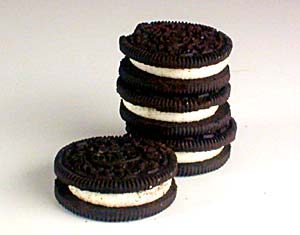
That is only 50 extra calories. Tiny. One Oreo is about 50 calories. A sip of soda. A pat of butter. But that 50-calorie surplus adds up.
3,500 calories (one pound of fat) divided by 50 extra calories a day equals 70 days. Every two months, you gain a pound. Over a year? Five pounds.
This is the pattern for a huge chunk of the U.S. population. It doesn’t require bingeing. It just requires a slight, consistent over-consumption. Keep this up, and the weight sticks. Then you diet. You lose it. You go back to 2,050 calories. It comes back.
The cycle repeats because we treat dieting as a temporary fix rather than a permanent adjustment. But adjusting how we eat to match our actual needs? That is the hard part. Because food is always there. And it is always convenient.
The Vienna Sausage Trap
Let’s be honest: the “Get Slim Miracle Diet” is a nightmare. Two cups of brown rice? A can of Vienna sausages? Onions until you cry? It’s not a plan; it’s a punishment. You’re looking at 1,000 calories a day while jogging two miles. That’s a deficit of roughly 1,200 calories daily.
The math is simple, even if the experience isn’t. Three days of that deficit burns off a single pound of fat. Do it for two months, and you’ll see 20 pounds vanish from the scale. It feels like magic. It feels like victory.
But here is the brutal truth about crash diets: they don’t work because they are temporary.
The moment you stop, reality hits. You’ve been eating boiled rice and tin meat for weeks. Your brain is screaming for flavor, for variety, for food. You likely binge. Then you settle back into your old habits. The weight returns. It often comes back heavier than before.
This is the cycle that traps most women. You lose the weight. You stop the diet. You gain it back.
Building a Sustainable Diet
So, what’s the alternative? If the extreme route is a trap, what’s the exit?
You need a sustainable diet. Not a temporary fix, but a lifestyle adjustment. This means eating normal foods in a normal way. It means a food and exercise plan that doesn’t feel like a second job.
Think about it. Why do you want to lose weight? To feel good? To have energy? To fit into those jeans? If the method makes you miserable, you will quit. And when you quit, the weight comes back.
A sustainable approach looks different. It’s about balance. It’s about eating enough to fuel your life, not so little that your body goes into survival mode. It’s about moving your body in ways you actually enjoy, rather than forcing yourself to jog two miles when you’d rather dance in your kitchen.
“You need a sustainable diet… that lets you live a normal life and eat normal foods in a normal way.”
This isn’t about perfection. It’s about consistency. It’s about realizing that food is fuel, but it’s also pleasure. You can have both. You just have to stop treating it like a war.
The goal isn’t to lose 20 pounds in two months by eating Vienna sausages. The goal is to keep them off for the next twenty years. That requires a plan that doesn’t end. A plan you can actually live with.
Does that sound boring? Maybe. But boring works.
Most of us treat weight management like a puzzle we can’t solve. The truth is simpler, if less forgiving. The landscape of modern life is literally paved with hidden calories. Exercise costs time and energy. A sustainable diet requires awareness. You cannot fix what you do not measure.
Start by counting what you eat. It feels tedious at first. But you need to understand exactly how many calories you consume on a normal day. You need to build a mental database. You must know the caloric value of every bite. In the United States, packaged goods carry nutritional labels. Chain restaurants provide this data online and in-store. Use these resources. Track your intake.
Calculating Your Baseline
Next, determine your daily requirement. A rough estimate uses 12 calories per pound of ideal body weight. For precision, use metabolic formulas. Pick your target weight. Calculate the calories needed to maintain it.
Compare this number to your actual intake. The gap between what you need and what you eat is where the extra pounds hide. This is not a mystery. It is arithmetic.
If the difference is large, you must close it. You will realize that 1,600 or 1,800 calories is not a lot. You must watch and count everything you consume. Stick to the limit.
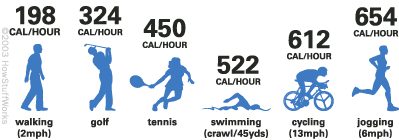
Consider adding exercise. It raises your calorie ceiling. An online exercise calculator can show you how many calories specific activities burn. Burning an extra 250 to 500 calories daily changes the equation significantly.
Cutting Calories Without Starving
Reducing intake requires strategy. It is not just about willpower. It is about smart swaps.
Keep a daily journal. Carry an index card. Write down every sip and bite. It forces accountability.
Remove calorie myths from your mind. Focus on facts.
Eliminate liquid calories. Drink water. Beverages like cola, orange juice, and beer add significant calories without triggering satiety. Consider this: 10 ounces of orange juice contains about 140 calories. It does not curb your appetite. Eating an orange tells a different story. You consume fewer calories. You chew, which has a psychological satisfaction. Your stomach fills. The orange provides a feeling of fullness. Juice does not.
Apply this logic to all caloric drinks. The calories enter. The hunger remains.
Stop adding white sugar. This single change removes a massive class of high-calorie snacks:
– Cookies
– Cake
– Ice cream
– Cola
– Candy
– Candy bars
Refusing sugary foods eliminates entire aisles in the grocery store. It simplifies shopping.
Cut fried foods. Avoid potato chips, cheese crisps, french fries, onion rings, donuts, fritters, and fried chicken. Deep-frying adds fat. It packs calories into small volumes. Remove sugar and fried foods. You remove most high-calorie snacks.
Replace high-density foods with low-density options. A cookie is high-density. It is mostly sugar and fat. One or two bites equal 50 to 100 calories. A banana is low-density. It takes many bites to eat. It delivers only 100 calories. You get volume. You get fullness. You stay within limits.
The math is clear. The choices are yours. Which path will you take today?
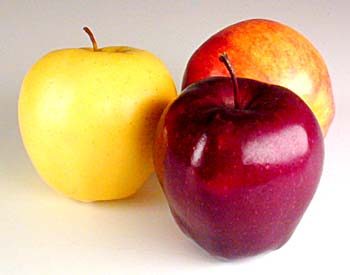
You’ve probably heard that apples are low in calories. But “low calorie” is abstract until you put it on a scale. Try this mental experiment.
Go to the pantry. Grab a dozen Oreo-style cookies. Or a box of those old SnackWell’s lite cookies. They look harmless. They feel innocent. But that dozen cookies packs 600 calories.
Now, imagine eating six bananas at one sitting.
You would physically explode. Your stomach would reject it. It’s too much bulk. Yet, those six bananas contain roughly the same 600 calories.
This is the power of food density.
Most of us navigate life by volume, not by energy. We fill our plates. We look for fullness. But fullness doesn’t mean satisfaction if the food is energy-dense. You need low-density foods. Foods that take up space in your gut without flooding your bloodstream with energy.
The Low-Density Advantage
Low-density foods are your secret weapon for managing weight without feeling starved. They allow you to eat larger portions while staying in a caloric deficit. This isn’t about willpower. It’s about physics.
Here is what qualifies as low-density fuel:
- Whole fruits and vegetables. Any natural state. Raw, steamed, roasted.
- Non-sugared cereals. Think shredded wheat. No honey. No chocolate coating.
- Rice cakes. Simple. Crunchy. Light.
- Unbuttered popcorn. Skip the oil. Use spices.
- Whole-grain bread. High fiber is non-negotiable here.
- Brown rice. More volume than white rice for the same calorie count.
Avoid the opposite. High-density foods are traps. They pack sugar and fat into tiny spaces. Nuts are healthy but dense. Meat is dense. Candy? Dense. Cookies. Crackers. Potato chips. Fried anything. Cola. Beer. These items don’t trigger satiety signals quickly enough. You eat them before your brain registers the energy load.
If you want to lose fat, you must keep calories consumed below calories burned. But you don’t have to eat like a bird to do it. You just have to change the texture of your diet.
Wear Your Goal
There is a psychological trick that works better than most diet apps.
Stop wearing sweatpants.
Put on form-fitting clothes. Leggings. Jeans. A fitted t-shirt.
This acts as a subliminal reminder. When you reach for a second helping, the waistband tightens. The fabric pulls. It’s a physical cue that says, stop. It keeps your goal in your peripheral vision all day long.
Fitting in Exercise Without the Gym
Exercise is a tool. A lever. It helps you burn more calories so you don’t have to starve yourself to maintain weight. But you don’t need an hour at the gym to make a dent.
Online calculators can show you exactly how many calories different activities burn. Use them. Know your numbers. Then, integrate movement into the cracks of your day.
1. Find what you can tolerate
You don’t have to love running. If you hate running, don’t do it. Find something you can endure for 30, 60, or more minutes daily. Walking. Riding an exercise bike while watching TV. Lifting weights at lunch. Consistency beats intensity.
2. Micro-exercises add up
Take the stairs. Park at the back of the lot. Walk while you talk on the phone. These aren’t workouts. They’re habits. But they burn calories without requiring mental preparation.
3. Desk weights
Keep a set of light weights at your desk. Lift them while you think. Lift them while you listen to a podcast. It breaks up the sedentary day and adds non-exercise activity thermogenesis (NEAT) to your routine.
4. Get a partner
Exercise is harder when you’re alone. It’s easier when
Stop Believing the Lies About Weight Loss
We’ve all been there. Scrolling through feeds, seeing headlines that promise miracles. But before you buy into the next big thing, let’s clear the air. There are dozens of myths designed to derail your progress. Here is what is actually happening, stripped of the marketing fluff.
Calories Are Just Energy
Let’s start with the most persistent lie: that some calories are “better” than others. They aren’t. If you eat 4,000 calories of white sugar or 4,000 calories of fat, your body sees the same total energy. The source matters for nutrition, yes. But for raw weight? It’s a simple equation. Input versus output.
The “Low-Fat” Trap
You think grabbing the fat-free version is a safe bet? Think again. Many low-fat products swap fat for sugar. That means they can have just as many, if not more, calories than the full-fat original. You can eat all you want, but if you are loading up on refined carbs to make up for the taste, you aren’t creating a deficit. You are just eating differently.
Passive Devices Don’t Work
No ring, bracelet, soap, or patch will burn fat for you. You have to burn the calories yourself. There is no passive shortcut. If a product claims to melt fat while you sleep, it is selling fantasy.
The Impossible Timeline
Let’s look at the math on those aggressive ads. You might see claims like, “I lost 54 pounds in 6 weeks without diets or exercise!”
Let’s break that down. To lose 54 pounds of fat, you need a deficit of roughly 189,000 calories. Spread over six weeks (42 days), that is about 4,500 calories a day.
How do you burn 4,500 calories daily? You would have to eat nothing and run a marathon every single day for six weeks. It is physically impossible. Losing weight that fast usually means dehydration or, in extreme medical cases, amputation. The ads are lying.
The “Enzyme” Myth
Then there are the supplements. Nettle seeds. Apple pectin. They all promise some “enzyme-driven fat-burning cycle” that burns calories 24/7.
No.
Your metabolism doesn’t work that way. There is no magical switch flipped by a seed.
The Real Truth
Here is the only thing that is true: To lose weight, you must consume fewer calories than you burn.
You can do this by eating less. Or by moving more. Or both.
Some people burn more calories per day than others. Just like some people are taller or have different hair loss patterns, metabolic rates vary. You need to find your number. What does your body burn in a day? Then, eat less than that.
It sounds simple. But it isn’t easy. The psychology of food is powerful. Hunger is real. Cravings are loud. It is a mental game, and you have to play it smart. There is no workaround.
For more on how diet pills work, or how your body actually processes fat, check out the related articles below.
Learn More About Weight Loss
If you want to dig deeper into the science, here are some practical resources:
- Ultimate Calorie Burning Quiz
- Weight Loss Quiz
- How Diet Pills Work
- How can a diet pill make you feel full?
- How Calories Work
- How Fat Cells Work
- How Fats Work
- How Food Works
- How Exercise Works
- Does drinking ice water burn calories?
- How do I burn calories on a stair machine?
Helpful Resources
- National Association of Anorexia Nervosa and Associated Disorders (ANAD)
- NIDDK: Statistics Related to Overweight and Obesity
- Fast Facts for Consumers: Diet Programs
- Ways to Win at Weight Loss
- Myths Concerning Weight Loss
- Destroying Diet Myths
- Losing Your Love Handles